Napa Cabbage and Tofu Doenjang Soup: A Korean Meal Beyond Hangover-Relief Claims
Yakseon Table · Korean recipes and ingredient stories ↗
After a night of drinking, searches for hangover foods or heotgae tea can make choosing a drink seem like the first task. Choosing tea and preparing breakfast are different decisions. Today we make a mild Korean home-style soup with napa cabbage, tofu and doenjang, Korean fermented soybean paste.
The aim is the cabbage’s gentle sweetness and doenjang’s savoury flavour, rather than a concentrated pot of medicinal ingredients. Neither this soup nor heotgae tea is presented here as a hangover cure or liver treatment.
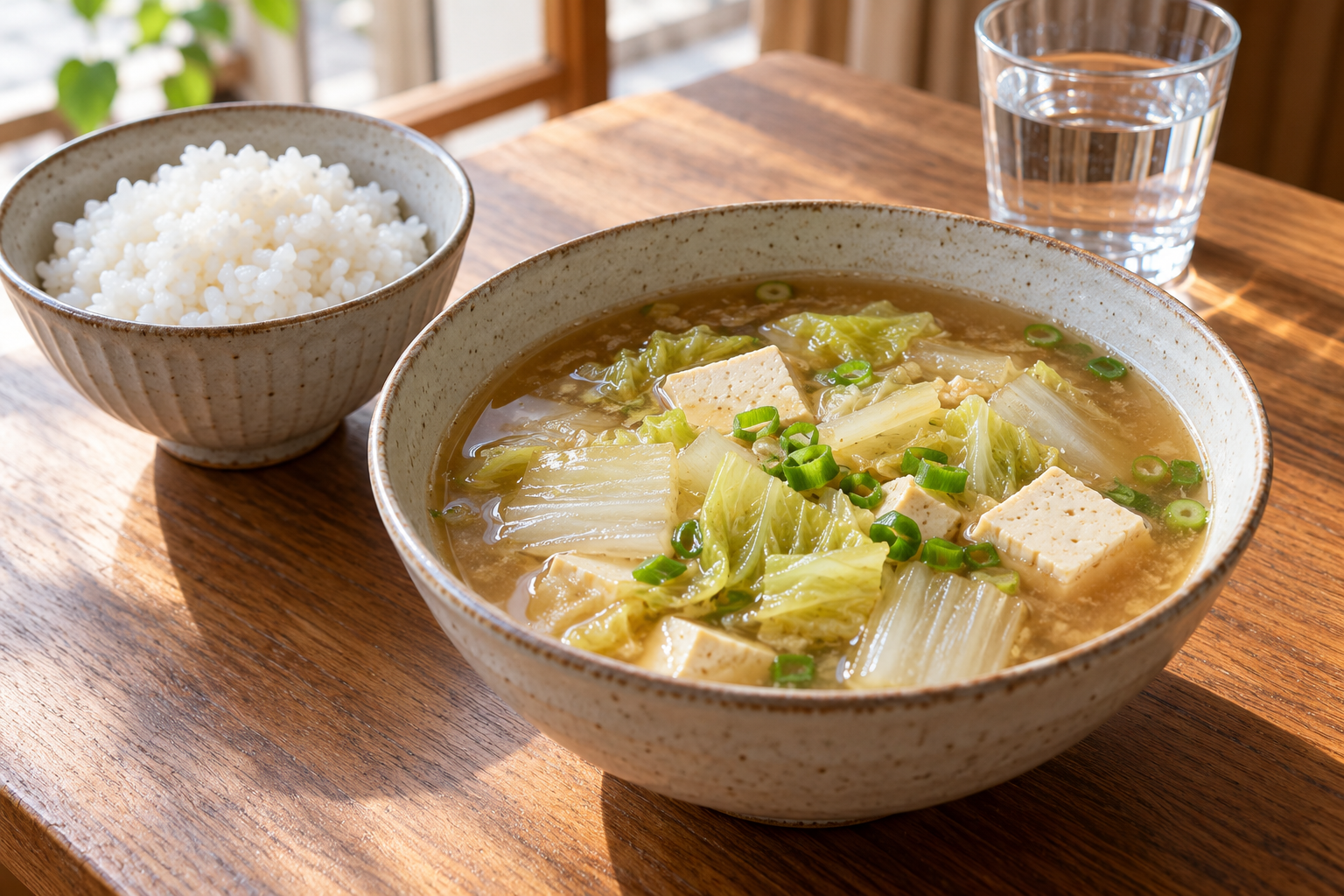
Keep product claims separate from your pot of soup
Korea’s Ministry of Food and Drug Safety publishes guidance on human testing for hangover-relief labelling and advertising.[1] A familiar ingredient name does not establish that findings from a particular tested product apply to homemade tea or soup. If choosing a heotgae beverage, read its ingredients and serving instructions.
We add neither heotgae wood nor beolnamu to this recipe. Instead of combining tree materials without confirming their edible parts and product-specific preparation instructions, we use everyday cooking ingredients. This is not a blanket claim that all heotgae beverages cause liver damage.
Why cabbage, tofu and doenjang?
Cabbage ribs and leaves soften at different speeds. Cook the thick ribs first and add the leaves later. Cut tofu into bite-size pieces and add it near the end; dissolve doenjang gradually to adjust the flavour. This is a choice about taste and texture, not a medicinal ratio.
The Rural Development Administration lists doenjang soup, seasoned vegetables, pancakes and stir-fries among possible uses for dried napa cabbage.[2] We refer to its culinary applications, not a hangover benefit. The recipe below uses fresh cabbage and is our home-cooking adaptation inspired by Korean food culture, not a reproduction of a specific Donguibogam prescription.
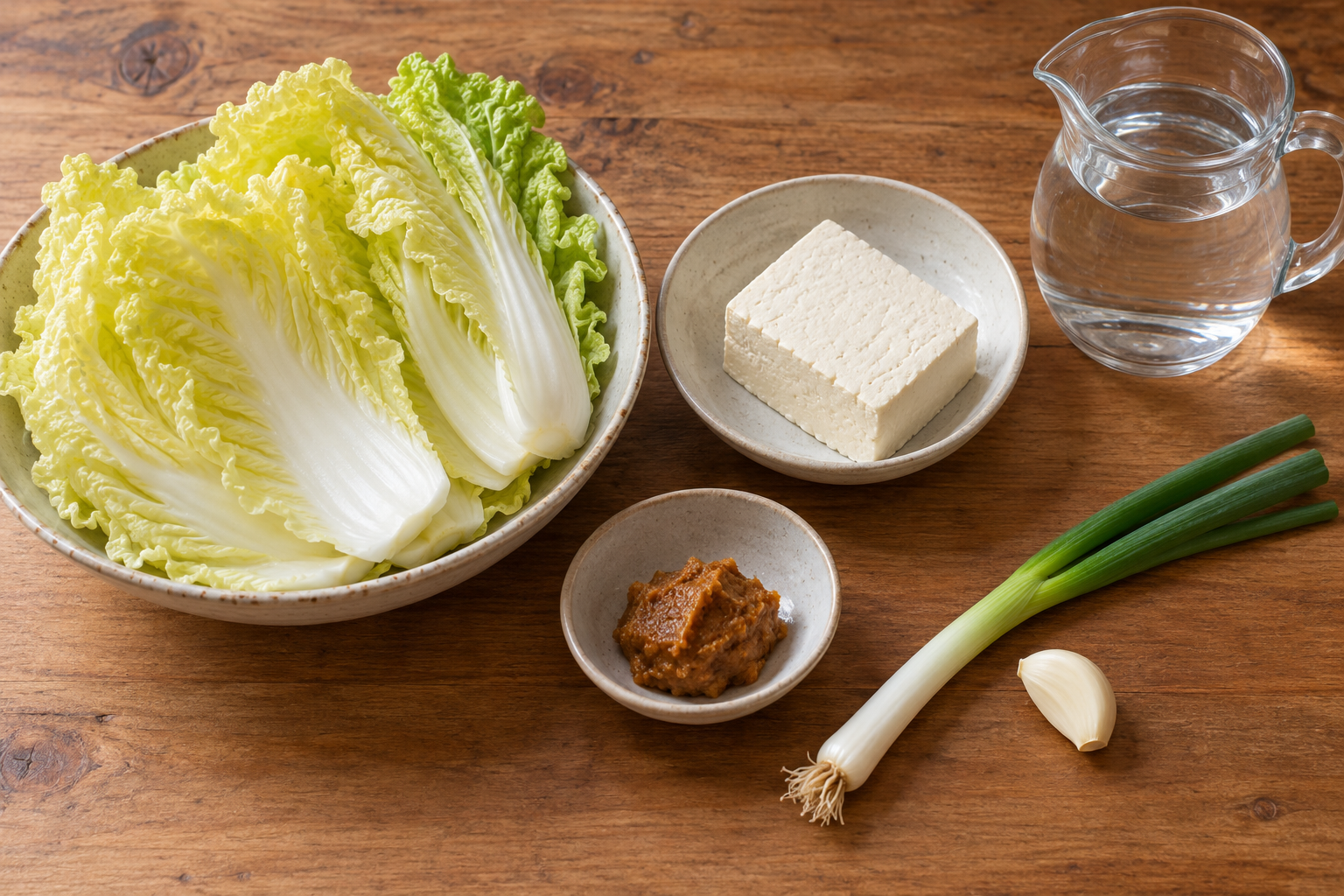
Napa cabbage and tofu doenjang soup — two servings
Prepare about 200 g fresh napa cabbage, 150 g tofu, 700 mL water, around 1 tablespoon doenjang, a little scallion and ½ teaspoon minced garlic. Start with about 2 teaspoons doenjang and taste before adding more: brands differ in saltiness. These are practical cooking amounts, not therapeutic doses.
- Wash between the cabbage leaves and cut into manageable pieces. Separate thick white ribs from thin leafy sections. Cut the tofu into bite-size pieces.
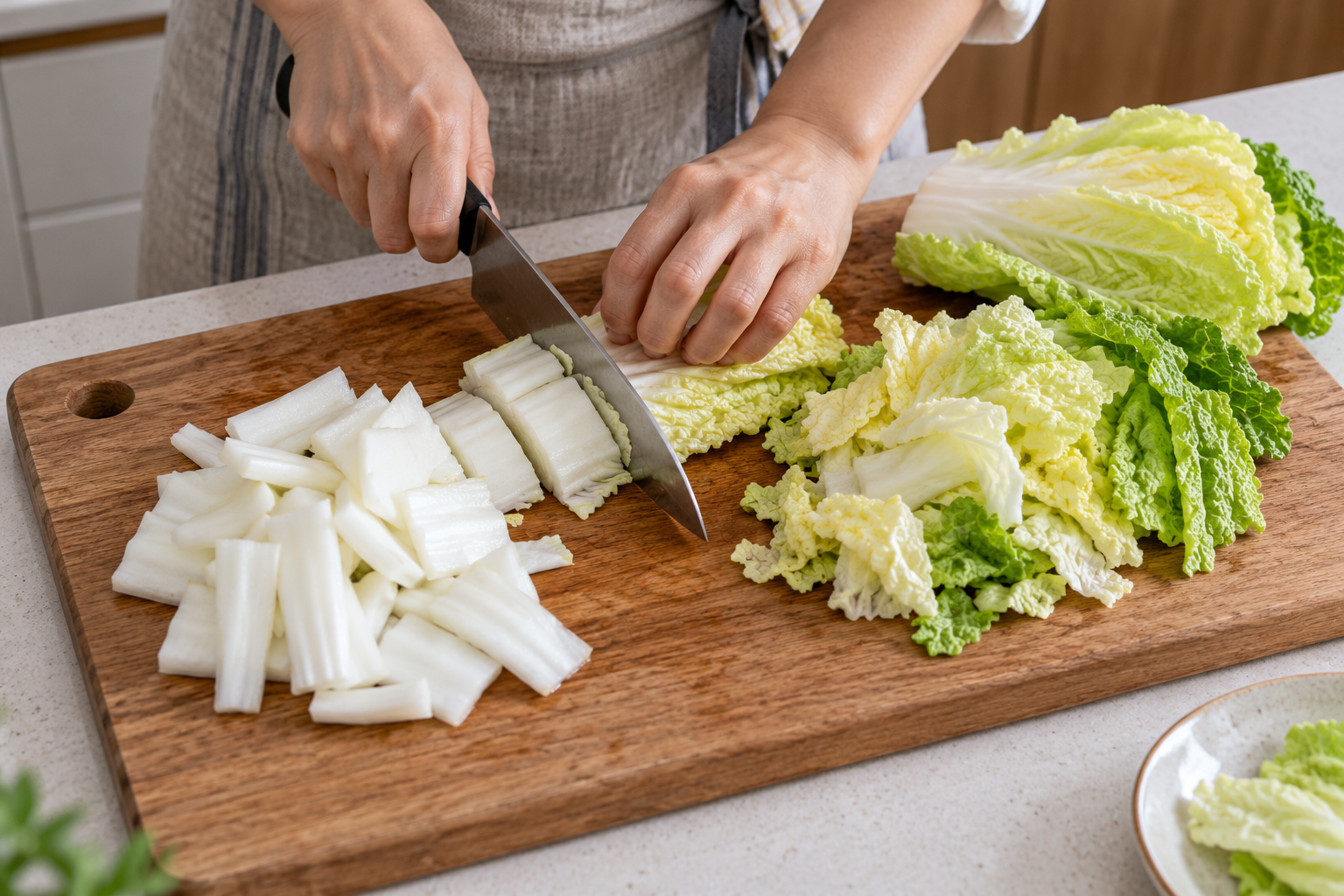
- Bring the water to a boil. Add the ribs first; after about 3–4 minutes, when they begin to soften, add the leaves.
- Dissolve doenjang a little at a time, add the garlic and simmer gently for about 5–7 minutes. Check the ribs’ tenderness rather than relying only on the clock.
- Add tofu and scallion and cook for another 2–3 minutes. Stir gently to keep the tofu intact. Add a little water if the broth tastes too salty.
Substitutions and finishing choices
If using young cabbage greens instead, trim tough bases and check tenderness. If tofu is unavailable, serve cabbage soup with a separate side dish. You can omit doenjang for a clear cabbage-and-tofu soup, but this changes the flavour; it does not promise an equivalent health effect.
Our basic version omits hot peppers and chilli powder. Family members can season their own portion after serving. Check soybean allergy information for tofu and doenjang, and wheat or other allergens listed on the specific paste.
A meal, not a detox promise
The centre of this table is soup with rice, not a stronger herbal drink. Serve an amount you can comfortably eat and take your time. Do not assume that food resolves symptoms after drinking; seek medical care if symptoms are severe or persistent.
Separating cabbage ribs and leaves is one small preparation step that makes the finished bowl more orderly. Try a modest pot with ingredients already in the fridge.
Korean sources and their limits
Source [1] concerns substantiating product claims; it is not evidence of this recipe’s effects. Source [2] describes dried-cabbage applications; its rehydration times are not used for the fresh cabbage in this recipe.
[1] Ministry of Food and Drug Safety, Guideline for Human Application Tests to Substantiate Hangover-Relief Labelling and Advertising, guide 1280-01, registered June 22, 2023.
[2] Rural Development Administration, National Institute of Crop Science, Dried Napa Cabbage as a Convenient Food Ingredient, December 13, 2018. This source concerns dried cabbage and culinary applications, not evidence that this fresh-cabbage soup relieves hangovers.
Yakseon Table · More recipes and Korean ingredient stories ↗

Comments
Post a Comment