Looking for Foods for Eye Fatigue: A Balanced Yakseon Meal with Goji Berries and Cassia Seed Tea
Official Yakseon Table Site ↗ Explore More Wild Herbs & Plants ↗
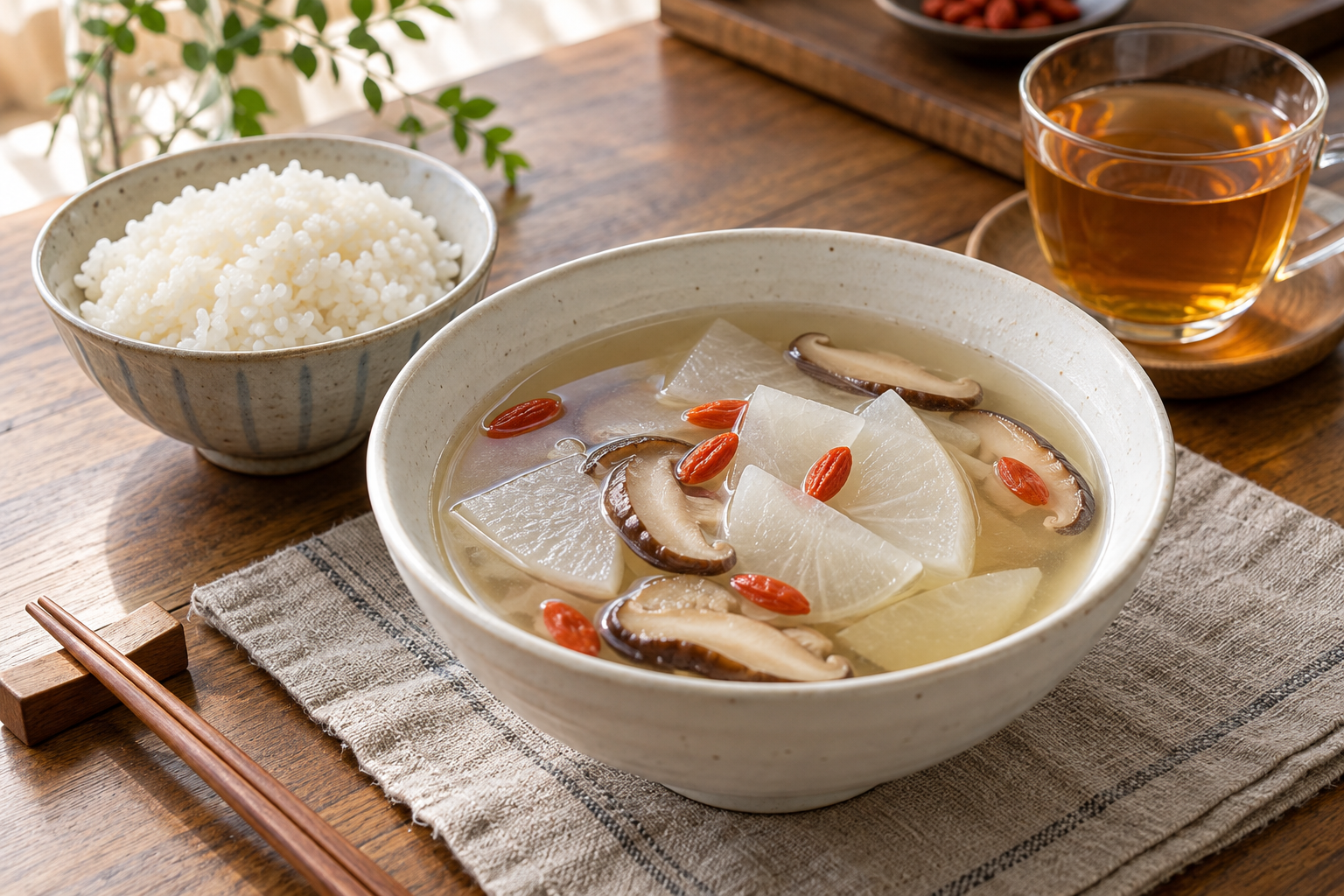
After spending long hours looking at a smartphone screen, your eyes often feel stiff and dry, and preparing dinner feels like a chore. Many people searching for foods to relieve eye fatigue immediately turn to goji berry tea (gugija-cha) or roasted cassia seed tea (gyelmyeongja-cha). In today’s Yakseon Table (Korean traditional food culture), rather than heavily combining strong herbal teas together, we introduce a gentle meal where a small amount of goji berries is simmered in a clear soup, while roasted cassia seed tea is served separately on the side.
This arrangement takes the selected ingredients—goji berries, cassia seeds, and Korean radish—and divides them into the savory flavor of a warm soup and the soothing aroma of a brewed beverage. This meal is not presented as a medical prescription to cure eye fatigue or restore vision. Along with this wholesome meal, we also examine everyday screen-viewing habits and dietary variety.
What Roles Do Traditional Herbal Ingredients Play?
Goji berries (gugija, wolfberries) bring their vibrant red hue and a gentle, natural sweetness to soup. A literature review in the Journal of Korean Ophthalmic & Otolaryngologic & Dermatologic Society examines both historical records connecting goji berries with eye health and modern studies. However, the review notes that traditional concepts like "brightening the eyes" (myeongmok) cannot be directly interpreted as clinical treatments for specific modern ophthalmic diseases. Therefore, our focus here is on utilizing goji berries as a wholesome home-cooking ingredient rather than an intensely concentrated remedy.[1]
Cassia seeds (gyelmyeongja, sicklepod seeds) provide a deeply nutty, roasted aroma. Use commercially prepared food-grade roasted cassia seed tea or tea bags, brewing them separately according to the package instructions. There is no rule stating that these two ingredients must be mixed together, nor do we claim that a particular ratio offers greater medicinal benefit.
Korean radish (mu) serves as the refreshing, clean base of the clear soup. Sliced thinly and cooked until tender, it pairs with a touch of shiitake mushrooms for added umami and aroma. This meal adapts traditional herbal ingredients into everyday home-style dining.
Today's Recipe: Clear Radish Soup with Goji Berries
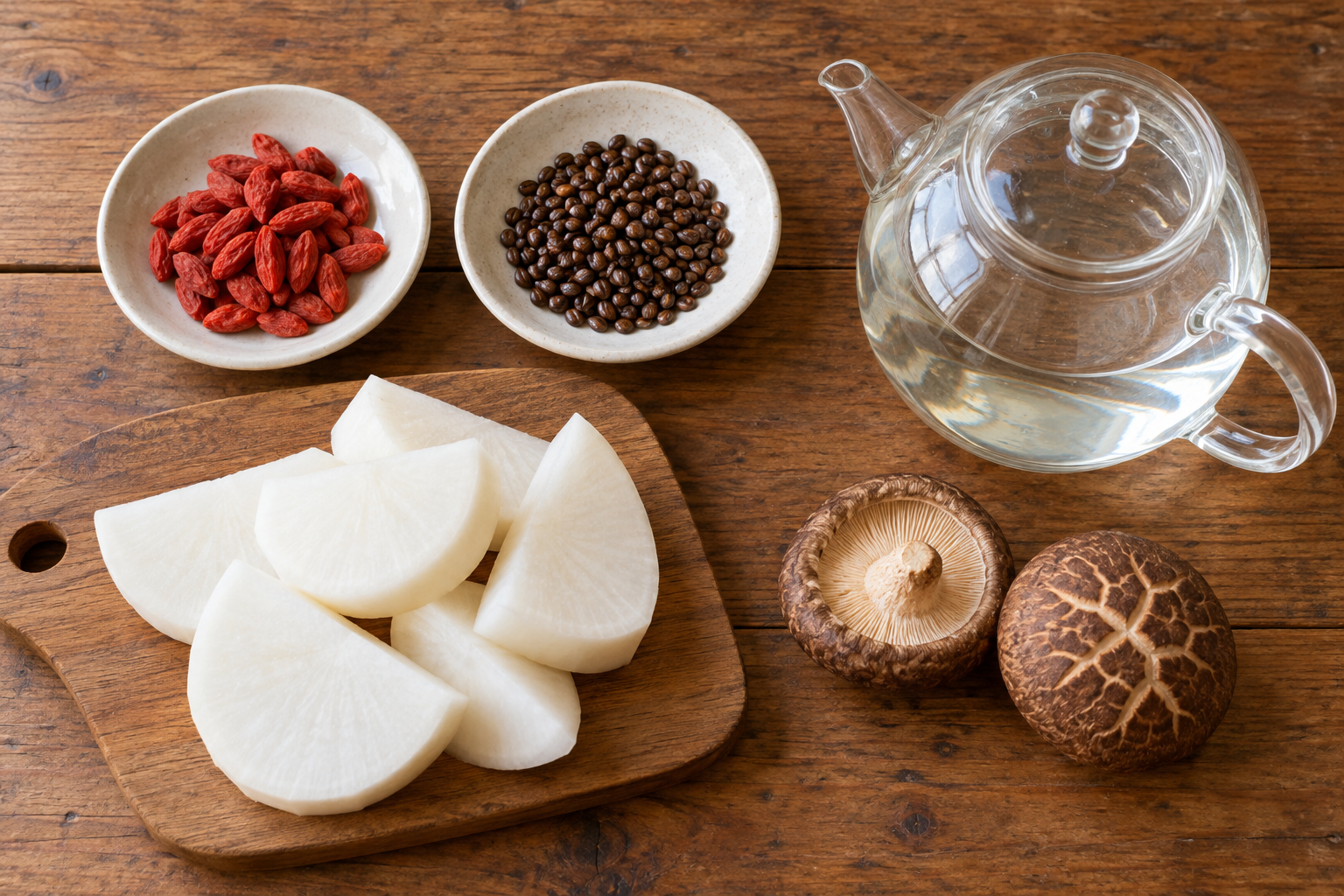
Sample portion for 2 servings: approx. 200 g Korean radish, 2 fresh shiitake mushrooms, approx. 1–2 tsp food-grade dried goji berries, approx. 700 mL water, and a pinch of salt. Adjust water and seasoning according to ingredient sizes and personal preference. These amounts are culinary household guidelines and are not intended as medicinal doses or therapeutic formulation ratios.
1. Wash the radish and slice it into thin bite-sized squares (nabak-sseolgi). Trim the stems of the shiitake mushrooms and slice them thinly. Rinse or prepare the goji berries according to package instructions.
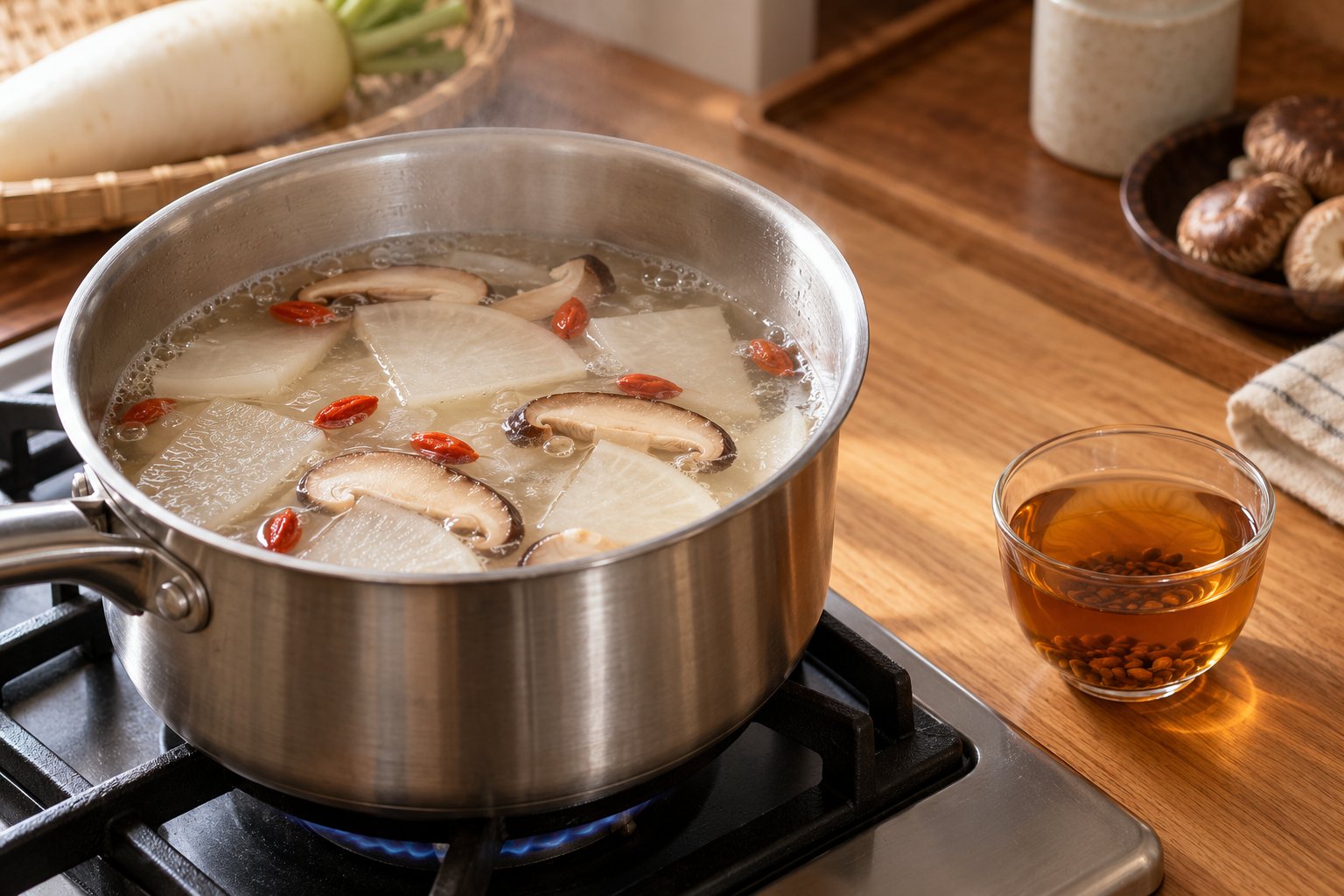
2. Add water and radish to a pot and bring to a boil; then lower the heat so the radish cooks until soft and translucent.
3. Add the sliced shiitake mushrooms and dried goji berries, simmering further. Check tenderness by gently piercing the radish with a chopstick to see if it enters smoothly.
4. Season lightly with salt at the end. Serve with warm rice, alongside your usual tofu or egg side dishes.
Serve the cassia seed tea separately in a small cup rather than mixing it into the broth. If you prefer not to have tea, plain water is perfectly fine. If you are using goji berries for the first time or are unfamiliar with their flavor, start with a smaller quantity to test your preference.
Pairing a Cup of Tea with a Diversified Plate
Relying solely on goji berries and cassia seeds does not make a complete eye-healthy diet. Korea's Food Information Nuri (Nongsikpum Jeongbo Nuri) highlights the value of obtaining diverse eye-related nutrients across varied farm produce, such as eggs, spinach, sweet potatoes, carrots, and citrus fruits. Keep this variety in mind when choosing side dishes to accompany today's soup or planning your next meals.[2]
When your eyes feel gritty or fatigued, review your working environment alongside your diet. The Korea Disease Control and Prevention Agency (KDCA) National Health Information Portal explains the vital role of the tear film, the importance of blinking, and the causes and management of dry eye syndrome. When working at screens for extended periods, take scheduled breaks and make a conscious effort to blink regularly. If discomfort persists, consult an eye care specialist to determine the cause. If you experience sudden vision changes or severe eye pain, seek immediate professional medical care rather than attempting to self-manage through food.[3]
The approach chosen by Yakseon Table today gives each ingredient its proper place: goji berries joined with radish in a soothing soup, cassia seeds enjoyed as a fragrant standalone tea, and other essential nutrients served through everyday side dishes. Which sounds more inviting for your table—a clear, comforting soup or a warm, savory cup of tea?
References
[1] Journal of Korean Ophthalmic & Otolaryngologic & Dermatologic Society, literature review examining traditional records and modern research on goji berries and chrysanthemum regarding ophthalmology (2018, Vol. 31, No. 2, pp. 1–). Consulted for traditional descriptions and the interpretative scope of modern research. Not used as evidence for clinical efficacy of the goji berry-cassia seed soup/tea combination.
View Original Reference Article ↗
[2] Food Information Nuri, "[HQ Level-Up] My Eye Health Has Declined Noticeably—What Should I Eat Instead of Lutein Supplements?", 2026.05.28. Guidance on nutrient intake from diverse agricultural foods.
View Original Reference Article ↗
[3] KDCA National Health Information Portal, "Dry Eye Syndrome". Reference for tear film mechanics, causes, and lifestyle management.
View Original Reference Article ↗
Official Yakseon Table Site ↗ Explore More Wild Herbs & Plants ↗
Tags: Foods for Eye Fatigue, Goji Berries, Cassia Seed Tea, Clear Radish Soup, Yakseon Cooking, Yakseon Table

Comments
Post a Comment