Gujeolcho Flower Tea: Aroma, Taste and a Thoughtful First Brew
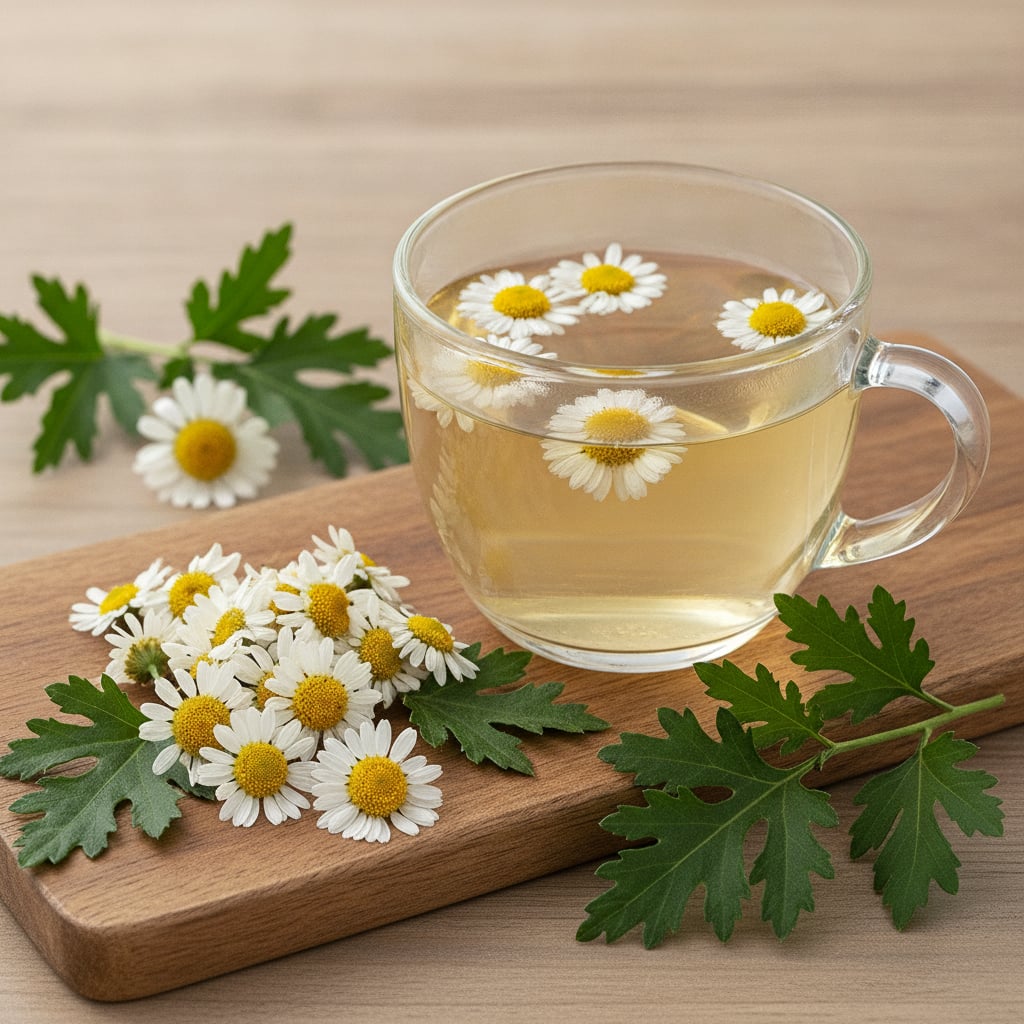
A kettle on the stove, a cup waiting on the table: before grand claims about health, a flower tea raises simpler questions. What does it smell like? How strong will it taste? How many flowers should go into the cup?
This guide approaches gujeolcho as a tea to enjoy. We begin with producers' descriptions and their brewing guidance, then put the traditional background and a modern study into context.
1. What aroma and taste should you look for?
Kkokdam's product catalogue describes its gujeolcho flower tea as having a wildflower aroma and a delicate taste. Haneulbaragi describes its own product as mild with a pleasantly nutty character.[1][2] These are the producers' descriptions, not a tasting review by us or a guarantee that every product tastes the same.
For your first cup, explore whether those descriptions match your experience. Once the tea has cooled enough to drink comfortably, notice the aroma, take a small sip and consider the finish. Does the floral note come first? Is there a nutty impression? Is the brew strong or light for your taste? There is no correct answer to discover—only your own preference.
Try a sip without honey or another tea first. If you prefer sweetness, adjust it afterward. This is a suggestion for appreciating the flavour, not a way to increase a special health benefit.
2. Preparing your first brew
Start with gujeolcho flower tea sold for consumption, a cup or small teapot, and water prepared according to that product's instructions. A removable strainer can make it easier to control strength.
① Check which product you have.
Flowers, products containing leaves and stems, tea bags and concentrates are not interchangeable. This article concerns flowers processed for drinking. Do not substitute ornamental flowers or flowers you have gathered yourself.
② Follow the instructions for your particular tea.
As one specific example, producer Gujeolcho Mom advises using two flowers for one person and pouring boiling water over them.[3] That instruction applies to its own product. Flower size, processing and tea-bag contents can differ, so it is not a universal recipe for other products.
③ Do not invent a steeping time.
That producer's page does not specify the volume of water or the duration of the first steep. We therefore have not added an unsupported temperature or number of minutes. Check the package. If it gives no detailed instructions, ask the seller how much water and how long to use for the first brew.
④ Find a strength you enjoy.
Brew as directed and allow the tea to cool to a comfortable drinking temperature. If the strainer or tea bag is removable, taking it out when the tea reaches your preferred strength is an option. If the taste is too strong, a little drinking water can lighten it. Comparing the same product under consistent conditions helps you learn your preference.
Whether to leave the flowers in the cup also depends on the product's guidance and your taste. The sources reviewed here do not establish a number of repeat infusions or a storage period for brewed tea.
3. An optional small accompaniment
Tea alone is enough. If you would like a snack, a small piece of baekseolgi (plain steamed rice cake) or a lightly flavoured rice cracker is an editorial suggestion. Think of a small plate beside the cup rather than a full meal.
Sip the tea, taste a little of the snack, then sip again. Notice how the snack's sweetness or aroma changes your impression of the tea. This is about an enjoyable tea break, not a medically tested pairing. A snack you already enjoy is also a good starting point.
4. Traditional background and modern research
Gangwon's Agricultural Research and Extension Services describes traditional medicinal uses of the whole gujeolcho plant, including warming the body's interior and regulating menstruation, while separately noting edible uses of its flowers and young shoots.[4] The traditional term for regulating menstruation explains part of its association with women's health.[5] It is not clinical evidence that ordinary flower tea improves menopausal symptoms.
A modern human study must also be distinguished from tea. A 2021 study tested the specific extract GCWB106 for 12 weeks in participants with mild knee osteoarthritis. It used an ethanol extract of stems and leaves, not flowers steeped in water. It did not investigate menopause or hormonal changes.[6]
Traditional stories can deepen our appreciation of a cup without making it equivalent to a research extract. Enjoy the aroma, find the strength you like and make time for the tea itself.
If you are pregnant, breastfeeding, receiving treatment or taking medication, check the product's ingredients with your clinician. This article discusses food culture and does not replace diagnosis or treatment.
What do you notice first in a flower tea: the aroma, the first sip or the finish? Share your preferences—and the little snacks you enjoy alongside it.
Explore more traditional ingredients and tea stories at Yakseon Table:
https://kfood.ksmart-farm.com/
Sources reviewed
[1] Kkokdam product catalogue: gujeolcho flower tea flavour description. A producer's description.
https://m.kkokdampartners.com/file_data/kkokdam1/2022/02/21/1a2f00aeed4e2a28ef043622306f7603.pdf
[2] Haneulbaragi official shop: gujeolcho flower tea, 8 g. A producer's description.
https://myflowertea.com/category/하늘바라기-소少적을소-드림꽃차/26/
[3] Gujeolcho Mom: product and drinking instructions for its own flower tea, not a universal brewing standard.
https://www.9mam.kr/business0101.html
[4] Gangwon Agricultural Research and Extension Services: gujeolcho, 18 November 2021.
https://www.ares.gangwon.kr/gwares/living_culture/historical/native?articleSeq=27542
[5] KMCRIC: explanation of the traditional term for regulating menstruation; not evidence of gujeolcho's efficacy.
https://www.kmcric.com/_2gwcrz
[6] Ha JK et al. GCWB106 knee osteoarthritis trial, Medicine, 2021.
https://pubmed.ncbi.nlm.nih.gov/34190191/
Full methods: https://pmc.ncbi.nlm.nih.gov/articles/PMC8257904/
Reviewed: 17 October 2026. Producer descriptions, research findings and Yakseon Table's editorial suggestions are distinguished throughout. This is not a firsthand tasting review.

Comments
Post a Comment