Braised Chicken (Dakjjim) Recipe: Why Goji Berries Replaced He Shou Wu, and a Chinese Yam Yakseon Dish
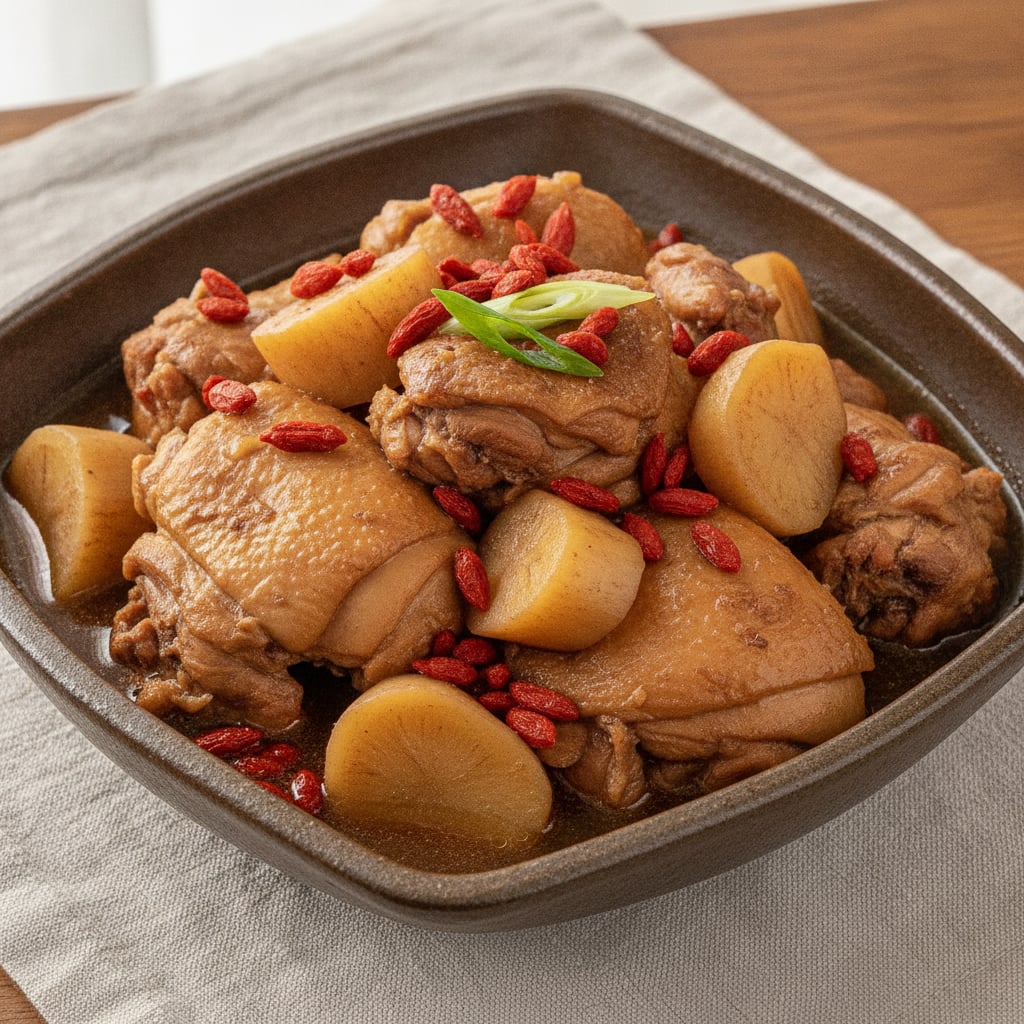
Does medicinal cuisine (*yakseon*) braised chicken (*dakjjim*) need to be packed with countless medicinal herbs? In our initial monthly plan, *hasuo* (*Polygonum multiflorum* / He Shou Wu) was considered. However, for a chicken dish meant for everyday dinner, we decided that goji berries (*gugija*)—which are readily available as food and offer predictable flavors—are far more suitable.
Therefore, today's braised chicken recipe leaves out He Shou Wu and instead features goji berries alongside *sanyak*, the traditional herbal culinary name for Chinese yam (often sold as *chamma* or *nagaimo*). The red goji berries contribute a gentle sweetness and bright visual contrast, while the yam lends a tender, velvety texture to the shallow broth. Understanding why an ingredient was excluded is just as meaningful as knowing what was added.
After a long day of staring at screens, deciding what to make for dinner can feel overwhelming. Simmering these three ingredients together in a single pot creates a comforting, visually warm dish that pairs naturally with a bowl of warm rice.
Today's featured menu is Goji Berry and Chinese Yam Braised Chicken (*Gugija Sanyak Dakjjim*). *Sanyak* simply refers to the edible yam familiar to our kitchens. Rather than decocting a specialized herbal tonic, this approach focuses on using accessible food-grade ingredients to cook a wholesome, delicious daily meal at home.
Why This Dakjjim Qualifies as Medicinal Cuisine (Yakseon)
Medicinal culinary cuisine (*yakseon*) is not about overloading a pot with things reputed to be good for the body. Instead, it is an approach that respects the season and the purpose of the meal, arranging the nature, flavors, and cooking methods of ingredients so they harmonize smoothly in a single dish without strain.
In this recipe, chicken serves as the centerpiece, complemented by Chinese yam to provide a soft, flaky, and tender texture. Goji berries are added in a modest amount to contribute natural color and subtle sweetness. The key lies in assigning distinct, complementary roles to these three ingredients rather than blending numerous strongly aromatic herbal roots.
Another fundamental principle of yakseon home cooking is that it should be suitable for everyday eating. Rather than making a broth that is excessively thick, sugary, or salty, this dish is finished as a light, saucy braise designed to accompany plain rice comfortably. Offering meals that can be enjoyed sustainably at the family table, rather than food meant to be taken like medicine, is the guiding philosophy of the Yakseon Table.
Cooking Information at a Glance
- Servings: 2 portions
- Prep Time: Approx. 10 minutes
- Cooking Time: Approx. 20–25 minutes
- Flavor Profile: Mild and savory without heavy saltiness, leaving a soft lingering sweetness from the goji berries
- Key Cooking Tip: Partially cook the chicken first; add the Chinese yam and goji berries later
Why Goji Berries Were Chosen Over He Shou Wu
Goji berries and Chinese yam have a long history in Korean food culture, featured in teas, porridges (*juk*), soups, and braises. Replacing He Shou Wu with goji berries does not imply that their physiological properties are identical. Rather, the selection was reconsidered from the practical standpoints of flavor balance, grocery availability, and ease of home cooking.
Instead of arbitrarily mixing strong medicinal-grade herbs like He Shou Wu at home, using small amounts of food-grade dried goji berries makes verifying the product and measuring portions straightforward. Their vivid red color stands out beautifully against the pale yam and chicken, and their gentle sweetness pairs naturally with soy sauce seasoning.
Chinese yam adds body and a soft texture to the simmering broth. Goji berries are not treated as an ingredient where "more is better"; they are used strictly in moderation so as not to overwhelm the chicken's savory flavor. Rather than adding multiple herbal roots, each ingredient was chosen for a clear, distinct role in both flavor and preparation.
Ingredients (2 Servings)
- Boneless chicken thighs: 350 g
- Culinary Chinese yam (*nagaimo* / *chamma*): 150 g
- Food-grade dried goji berries: 5 g
- Scallion (green onion): 20 g
- Minced garlic: 1 tsp
- Soy sauce: 1 tbsp
- Water: 200 mL
- Toasted sesame oil: 1 tsp
*Note: Please use goji berries and yam sold strictly for culinary consumption. If the packaging includes specific washing or preparation instructions, prioritize those steps.*
Step-by-Step Cooking Instructions
1. Prepare the Ingredients
Handling raw Chinese yam can cause temporary skin irritation or itching due to natural calcium oxalate crystals. Wear kitchen gloves while peeling the skin, then slice the yam into roughly 2 cm (about 0.8-inch) chunks. Cut the chicken into bite-sized pieces and slice the scallion diagonally. Do not wash raw poultry in the sink; instead, immediately wash your hands, knife, and cutting board after handling the chicken.
2. Simmer the Chicken First
In a pot, combine 200 mL of water, the soy sauce, minced garlic, and the cut chicken. Bring to a boil. Once it starts boiling, reduce the heat to medium-low and cover with a lid.
3. Add the Chinese Yam and Goji Berries
Once the outer surface of the chicken has cooked and turned opaque, add the sliced Chinese yam and the prepared goji berries. If the liquid evaporates too quickly, add small splashes of water. Avoid stirring vigorously so the yam does not break apart.
4. Cook Thoroughly
Simmer for an additional 15 to 20 minutes, then check the thickest piece of chicken. If you have a food thermometer, verify that the internal temperature reaches at least 74°C (165°F). When a chopstick slides easily into the yam, add the sliced scallions and simmer briefly for one more minute.
5. Finish with Aroma
Turn off the heat, drizzle with toasted sesame oil, and stir gently to combine. Avoid heavy salting from the start; taste the broth at the very end and adjust only if additional seasoning is needed.
Tips for an Even More Delicious Dish
Leaving a moderate amount of shallow broth makes this dish ideal for spooning over warm rice. If you wish to preserve the crumbly, tender texture of the yam, avoid dicing it too small. Before reaching for corn syrup or sugar to increase sweetness, appreciate the subtle, natural sweet notes released by the goji berries and yam.
When plating, use a wide, shallow bowl so the chicken, ivory yam, and bright red goji berries are all visible. Scattering fresh green scallions on top just before serving adds an appetizing visual finish.
Common Questions While Cooking
What should I do if the Chinese yam keeps falling apart in the broth?
If the yam is cut too small or added to the pot at the very beginning with the raw chicken, it will break apart easily. Cut it into roughly 2 cm pieces and introduce it only after the surface of the chicken has cooked through. Rather than stirring roughly with a spoon, gently tilt and swirl the pot by its handles to distribute the sauce.
What if the broth turns out too salty?
Do not add more soy sauce at the start. If it becomes too salty, add a little extra water, bring it back to a quick simmer, and taste again. Even when meant to be eaten over rice, boiling the liquid down excessively can cause the salinity to spike abruptly.
Will the dish taste better if I add a lot more goji berries?
Adding excessive goji berries can cause their sweetness and unique tart, earthy notes to dominate, masking the clean savory taste of the chicken. We recommend starting with 5 g for a 2-serving portion, then adjusting slightly to your personal taste during subsequent preparations.
Introducing This Dish to Global Kitchens
Depending on the region, fresh edible yam is sold under names such as 'Chinese yam' or 'nagaimo' in Asian markets. If Chinese yam is unavailable locally, you might explore adaptations using root vegetables with similar tender textures. Keep in mind, however, that different root vegetables require different cooking times and impart different flavor profiles, meaning the cooking process will need adjustments.
How would you adapt this gentle braised chicken if you were preparing it with local ingredients in your country? Let us know in the comments about accessible regional vegetables, favorite side pairings, or your preferred seasoning balance. Your ideas will help inspire future recipes on the Yakseon Table.
Stories of Korean Food Culture from Yakseon Table · Explore Wild Herbs and Greens
*Safety Notice: If you are taking prescription medications or have specific dietary restrictions, please consult a qualified healthcare professional to confirm whether ingredients such as goji berries are suitable for your individual condition.*

Comments
Post a Comment